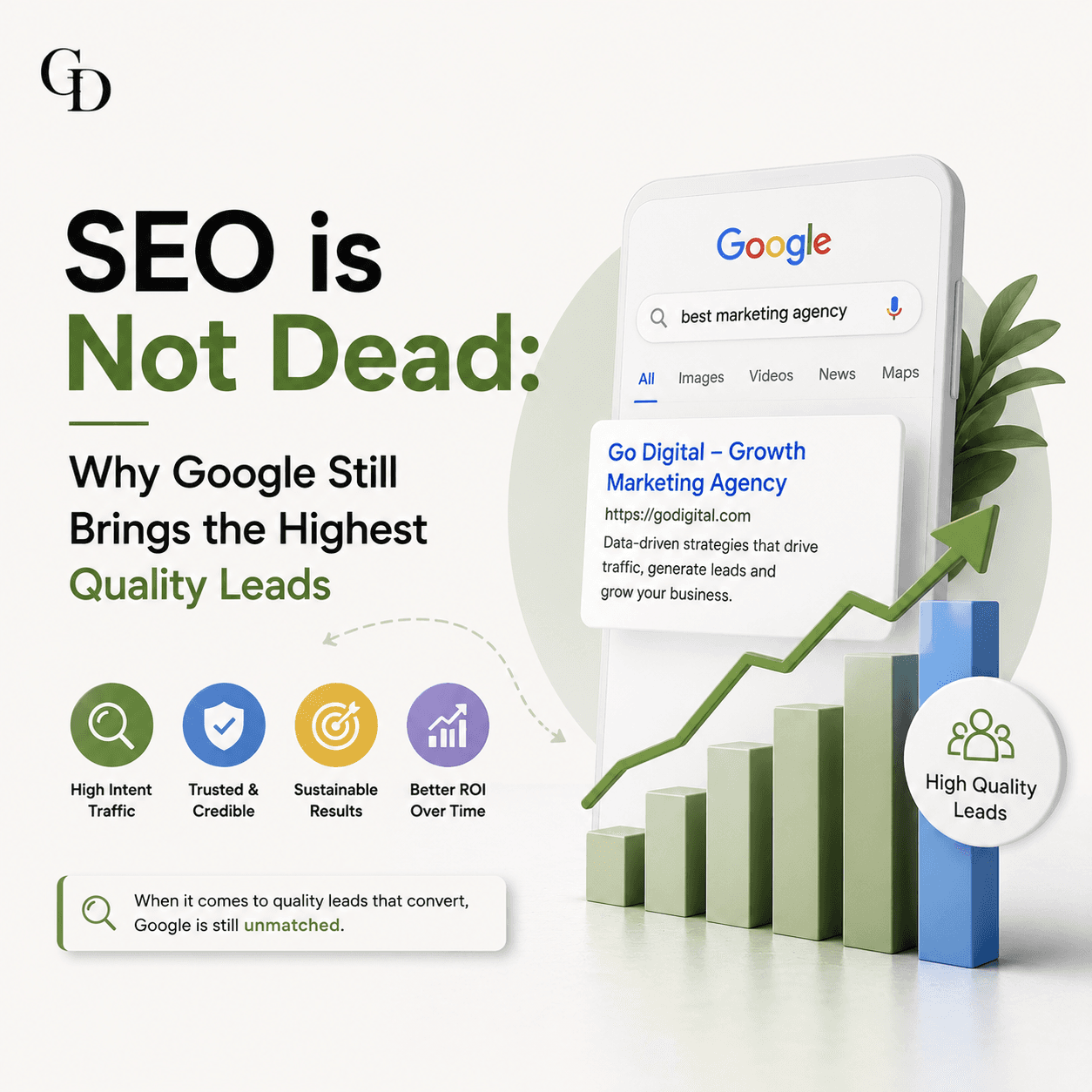
While everyone is chasing social media trends, Google is still quietly delivering customers who are actively looking to buy.
Every few months, someone declares that SEO is dead.
The reasons keep changing:
- AI is replacing search.
- Google Ads dominate results.
- Social media is the new search engine.
- Chatbots answer everything.
Yet businesses that invest in SEO continue to generate high-quality leads, reduce customer acquisition costs, and build long-term online visibility.
The truth is simple:
SEO isn't dead. Poor SEO strategies are.
Let's explore why search engine optimization remains one of the most valuable digital marketing channels in 2026.
People Still Search Before They Buy
Think about your own buying behavior.
Before purchasing a product or hiring a service, what do you do?
You search on Google.
Examples include:
- Best digital marketing agency
- Shopify development company
- Best dermatologist near me
- Luxury watches online
- SEO services for small businesses
These aren't casual searches.
They are signals of intent.
Unlike social media users who are scrolling for entertainment, Google users are actively searching for solutions.
That difference makes SEO one of the highest-converting marketing channels.
SEO Attracts High-Intent Traffic
Not every website visitor is valuable.
A person who accidentally clicks your Instagram ad may leave within seconds.
A person searching for:
"Best Shopify agency in Delhi"
already knows what they want.
They're comparing options before making a decision.
SEO attracts visitors at the exact moment they need your business.
That's why search traffic generally converts better than interruption-based advertising.
Organic Traffic Keeps Working Long After You Publish
Paid advertising stops the moment your budget runs out.
SEO works differently.
A well-written blog or optimized landing page can continue generating visitors for months or even years.
One article ranking for the right keyword can bring:
- Qualified traffic
- Leads
- Brand awareness
- Sales
- Backlinks
...without paying for every click.
SEO is a long-term investment that compounds over time.
AI Didn't Kill SEO—It Changed It
AI tools have transformed how people search, but they haven't eliminated the need for search engines.
Users still want trustworthy information, expert advice, product comparisons, reviews, and local businesses.
Google now rewards content that demonstrates:
- Real expertise
- First-hand experience
- Helpful insights
- Clear structure
- Genuine value
Mass-produced AI articles with little originality struggle to perform because they don't provide anything unique.
The brands succeeding today combine AI for efficiency with human expertise for quality.
Local SEO Is More Important Than Ever
If you run a local business, Google is often your biggest source of customers.
When people search:
- Digital marketing agency near me
- Restaurant nearby
- Interior designer in Delhi
- Dentist in Gurgaon
Google prioritizes businesses with strong local SEO.
Optimizing your:
- Google Business Profile
- Reviews
- Local citations
- Location pages
- NAP consistency (Name, Address, Phone)
can dramatically improve visibility and lead generation.
SEO Builds Trust Before the First Conversation
Ranking on Google's first page creates credibility.
Most users assume businesses appearing in top results are more established and trustworthy.
Even if they don't contact you immediately, they've already been introduced to your brand.
Over time, repeated visibility builds familiarity—and familiarity builds trust.
SEO isn't just about traffic.
It's about reputation.
Content Is the Foundation of SEO
Google's goal is simple:
Provide the most useful answer to every search query.
That's why businesses publishing valuable content continue to outperform competitors who only focus on sales pages.
Examples of high-performing content include:
- Buying guides
- How-to articles
- Industry trends
- Case studies
- Product comparisons
- Frequently asked questions
Every helpful article becomes another opportunity for customers to discover your business.
Technical SEO Still Matters
Even the best content won't rank if your website has technical issues.
Common problems include:
- Slow page speed
- Broken links
- Poor mobile experience
- Duplicate content
- Missing meta titles and descriptions
- Improper heading structure
- Indexing errors
Technical SEO ensures search engines can properly crawl, understand, and rank your website.
Think of it as building a strong foundation before constructing the house.
SEO and Google Ads Work Better Together
Many businesses think they have to choose between SEO and paid advertising.
The smartest brands use both.
Google Ads provide immediate visibility and quick leads.
SEO builds long-term authority and reduces dependence on paid traffic.
Together, they create a balanced marketing strategy that delivers both short-term results and sustainable growth.
The Biggest SEO Mistakes Businesses Make
Many companies invest in SEO but fail because they:
- Target keywords with no buying intent.
- Publish generic AI-generated articles.
- Ignore technical SEO.
- Forget mobile optimization.
- Never update old content.
- Focus only on rankings instead of conversions.
- Expect results within a few weeks.
SEO rewards consistency, patience, and quality—not shortcuts.
What Actually Works in 2026
Businesses seeing consistent SEO success focus on these principles:
- Publish genuinely helpful, original content.
- Target keywords with commercial and informational intent.
- Optimize every page for user experience.
- Improve website speed and Core Web Vitals.
- Build topical authority instead of isolated blog posts.
- Strengthen internal linking across the site.
- Earn quality backlinks naturally.
- Keep content updated as search trends evolve.
- Optimize for local search where relevant.
- Measure success through leads and revenue, not rankings alone.
Final Thoughts
SEO has evolved significantly, but it remains one of the most reliable ways to attract customers who are already looking for what you offer.
Unlike paid ads that stop when the budget ends, SEO continues to deliver value over time by building visibility, trust, and authority.
Businesses that consistently create useful content, maintain technically sound websites, and focus on solving real customer problems will continue to benefit from search—regardless of how technology changes.
SEO isn't dead. It's simply become smarter.
And businesses that adapt to that reality will continue to generate some of the highest-quality leads available online.