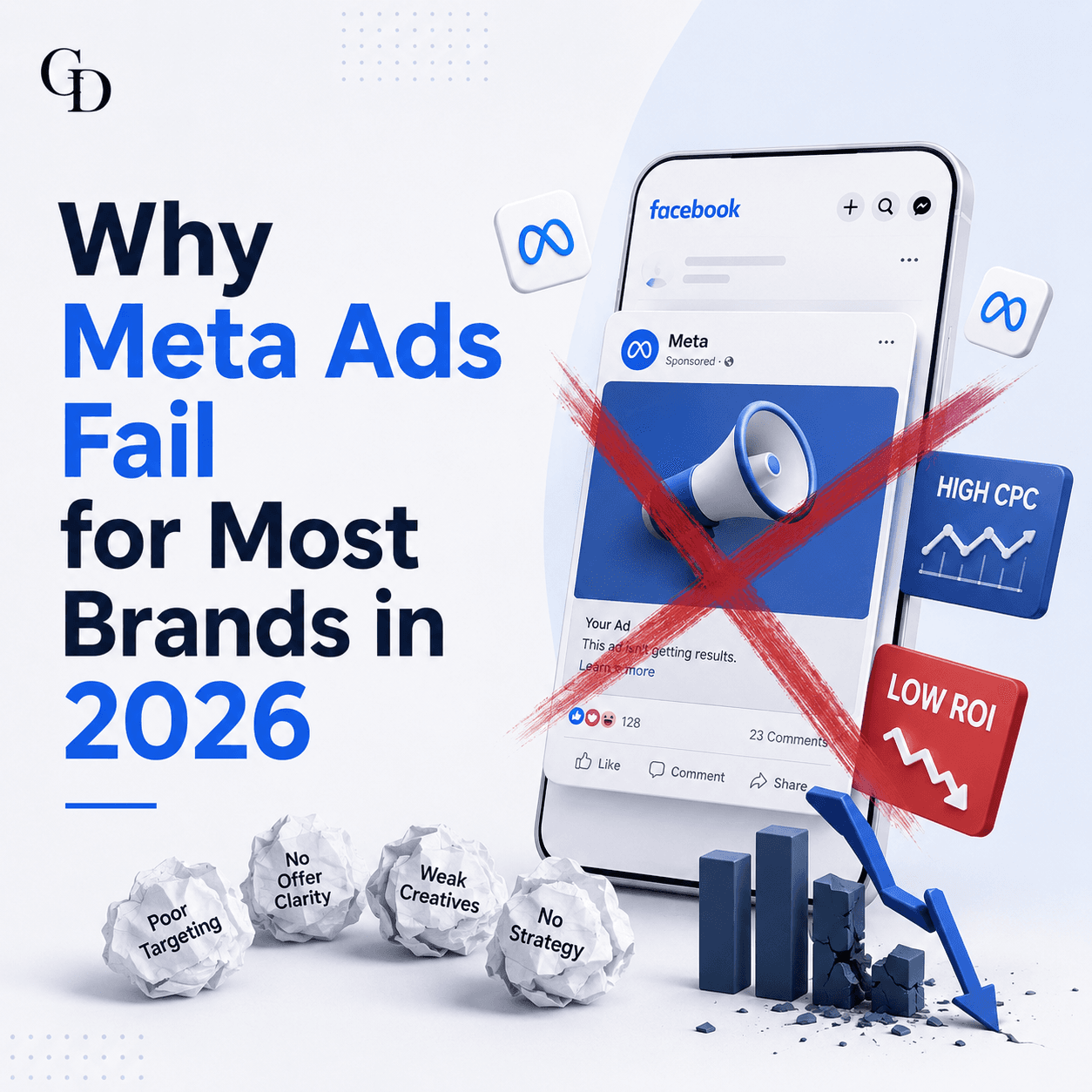
If you've ever heard someone say, "Meta Ads don't work anymore," chances are they aren't telling the whole story.
Every day, thousands of businesses launch Facebook and Instagram campaigns expecting instant sales. They spend money, wait for conversions, and eventually blame the platform when results don't come.
The reality is very different.
In 2026, Meta Ads have become more intelligent than ever before—but they've also become far less forgiving. Brands using outdated strategies are watching their advertising budgets disappear without meaningful returns, while brands adapting to the latest ecosystem continue to scale profitably.
Let's understand why.
1. You're Selling Instead of Solving
Consumers are exposed to thousands of advertisements every day.
If your creative simply says:
- Buy Now
- Limited Offer
- Best Quality
- Sale Ends Today
...you're blending in with every other advertiser.
Today's customers don't buy products.
They buy solutions, emotions, convenience, and identity.
Instead of advertising a watch...
Sell confidence.
Instead of advertising skincare...
Sell healthier skin.
Instead of advertising clothing...
Sell the feeling of looking your best.
The best Meta ads focus on transformation—not products.
2. Weak Creative is Killing Performance
Meta's AI has become incredibly powerful.
But it cannot fix boring content.
Most brands still use:
- Static product images
- Generic graphics
- Over-designed creatives
- Random Canva templates
Meanwhile, winning brands create:
- UGC videos
- Customer testimonials
- Product demonstrations
- Founder stories
- Lifestyle videos
- Before & After transformations
Creative has become the biggest factor influencing campaign performance.
In many industries, the creative contributes more to success than campaign settings.
3. Brands Ignore the First 3 Seconds
People scroll extremely fast.
If your video doesn't capture attention immediately, it won't matter how great the rest of your ad is.
Winning ads usually begin with:
- A surprising statement
- A relatable problem
- A bold question
- An emotional hook
- A visual transformation
Examples:
"Still wasting money on Facebook Ads?"
"Most Shopify stores never scale because of this mistake."
"Nobody talks about this marketing strategy..."
The first three seconds decide whether your ad gets watched—or ignored.
4. Tracking Problems Create False Decisions
One of the biggest reasons businesses think Meta Ads have stopped working is inaccurate tracking.
Many stores have:
- Incorrect Pixel setup
- Missing Conversion API
- Duplicate events
- Broken Purchase tracking
- Poor attribution
As a result:
Meta receives incorrect signals.
The algorithm optimizes for the wrong audience.
Businesses pause campaigns that were actually generating sales.
Before increasing your budget, always verify your tracking.
5. Testing Only One Creative
Many businesses launch:
One campaign.
One creative.
One audience.
Then expect massive results.
Successful advertisers continuously test:
- Different hooks
- Different thumbnails
- Different offers
- Different headlines
- Different CTAs
- Different video lengths
Scaling isn't about finding one perfect ad.
It's about finding the next winning creative before the current one stops performing.
6. Optimizing Too Early
One common mistake is editing campaigns every few hours.
Changing:
- Budget
- Audience
- Placements
- Ad copy
...resets Meta's learning process.
Give campaigns enough data before making major decisions.
Patience often performs better than constant optimization.
7. Sending Traffic to a Bad Website
Meta can generate clicks.
It cannot fix a poor shopping experience.
Common issues include:
- Slow website speed
- Confusing navigation
- Weak product pages
- No trust signals
- Complicated checkout
- Poor mobile experience
Even excellent ads fail if customers don't trust the website.
Think of Meta Ads as a salesperson.
Your website is the store.
A great salesperson can't sell inside a messy store.
8. Scaling Too Fast
Many brands increase budgets by 100–300% overnight after seeing initial success.
The result?
- Higher CPM
- Lower ROAS
- Reduced conversion rate
Instead, scale gradually and support successful campaigns with fresh creatives.
Creative fatigue is inevitable.
Creative refresh is essential.
9. Ignoring Retargeting
Most visitors don't purchase the first time they see your ad.
People compare prices.
Read reviews.
Check competitors.
Come back later.
Brands that only run cold campaigns leave money on the table.
A complete Meta strategy includes:
- Prospecting campaigns
- Retargeting website visitors
- Retargeting video viewers
- Cart abandonment campaigns
- Existing customer campaigns
Retention is often cheaper than acquisition.
10. Expecting Meta Ads to Build an Entire Brand
Paid advertising drives attention.
It doesn't create trust overnight.
Brands that scale successfully combine:
- Organic content
- Influencer collaborations
- SEO
- Email marketing
- SMS marketing
- Excellent customer support
- Strong branding
Meta Ads work best as part of a complete marketing ecosystem—not in isolation.
What Actually Works in 2026
The brands consistently succeeding on Meta focus on a few core principles:
- Create content that feels native to Instagram and Facebook.
- Prioritize authentic UGC over polished advertisements.
- Install Meta Pixel and Conversion API correctly.
- Test multiple creatives every week.
- Build fast, mobile-first landing pages.
- Run structured retargeting campaigns.
- Scale budgets gradually.
- Use data to make decisions, not assumptions.
- Invest in branding alongside performance marketing.
- Continuously refresh creatives to avoid ad fatigue.
Final Thoughts
Meta Ads haven't become ineffective—they've become more competitive.
Businesses relying on strategies from a few years ago often see rising costs and disappointing results. Those that embrace creative-first marketing, accurate tracking, and ongoing testing continue to achieve strong growth.
The biggest shift in 2026 isn't the algorithm. It's the expectation that brands deliver genuine value, engaging content, and a seamless customer experience.
If your ads aren't performing, don't assume the platform has stopped working. More often than not, the opportunity lies in improving the strategy behind the campaign.
Need help scaling your Meta Ads? At Go Digital, we help eCommerce and D2C brands build high-performing campaigns, optimize tracking, and create conversion-focused creatives that turn ad spend into sustainable growth.